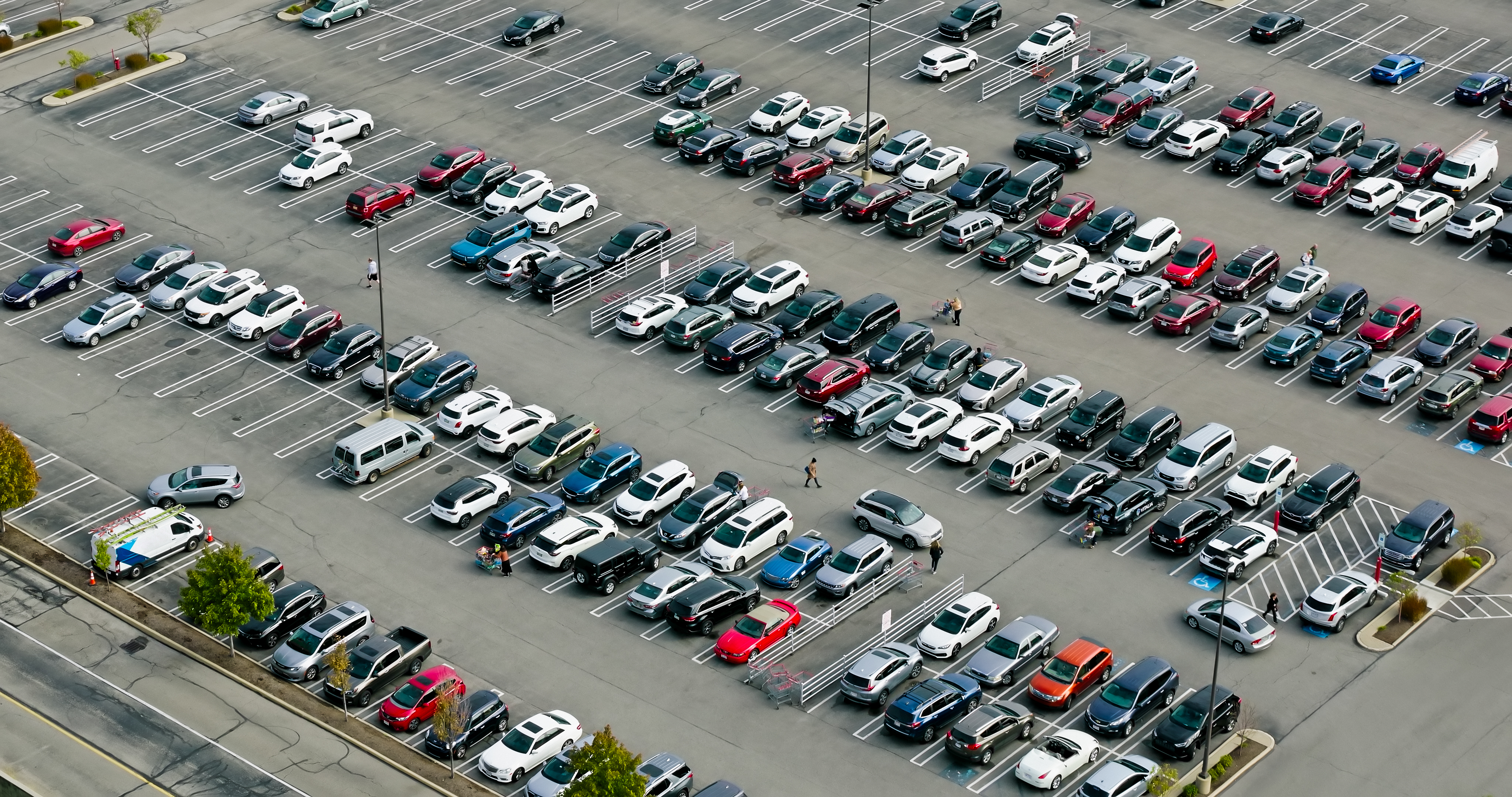
Parking lots can be chaotic environments, filled with tight spaces, constant movement, and pedestrians eager to get to their destinations. These conditions can make them difficult areas to navigate, especially at night or in the winter months. Whether you’re a driver or a pedestrian, here are 4 tips that can help keep safety at the forefront in parking lots.
- Slow down when driving in a parking lot or pulling into a spot. When driving through a parking lot, reduce your speed to stay alert for pedestrians crossing, drivers coming and going, workers returning carts, and other potential hazards.
- Look out for pedestrians and minimize blind spots. When backing out of a parking spot, make sure to use mirrors and back-up cameras, and minimize blind spots where possible. It is important to remember that pedestrians may not always be looking out for you.
- Identify crosswalks and stop signs. Many parking lots have built-in crosswalks and stop signs to aid in the flow of traffic and to help keep pedestrians safe. Make sure to follow crosswalk precautions and pause an extra few seconds to make sure pedestrians are not crossing.
- Use extra caution at nighttime or in bad weather. Driving at night can make objects or pedestrians harder to see, especially if they are wearing dark clothing. Snow accumulation in parking lots can create large snowbanks, so make sure to double check your surroundings.
By following these tips and taking extra precautions, it can help keep parking lots safer for both pedestrians and drivers.
Source:
U.S. Department of Transportation, National Highway Traffic Safety Administration. Pedestrian Safety: Prevent Pedestrian Crashes. NHTSA, https://www.nhtsa.gov/road-safety/pedestrian-safety. Accessed 12 Feb. 2026.
This information and any attachments or links are provided solely as an insurance risk management tool. They are derived from information believed to be accurate. Utica Mutual Insurance Company and the other member insurance companies of the Utica National Insurance Group (“Utica National”) are not providing legal advice or any other professional services. Utica National shall have no liability to any person or entity with respect to any loss or damages alleged to have been caused, directly or indirectly, by the use of the information provided. You are encouraged to consult an attorney or other professional for advice on these issues.
Utica National may link to websites operated by other entities within this site. Utica National makes no representations, and disclaims all liability, as to the content or material available at those locations, the accuracy of information, and the quality of products or services provided or advertised on linked websites. By clicking into a linked website, you will leave this site, and you may be subject to the terms and conditions governing the use of such third-party websites. Clicking on any link to a third-party website is done solely at your own risk, and it is your responsibility to take all protective measures to guard against viruses or other destructive elements that may arise or result from the use of any third-party website.